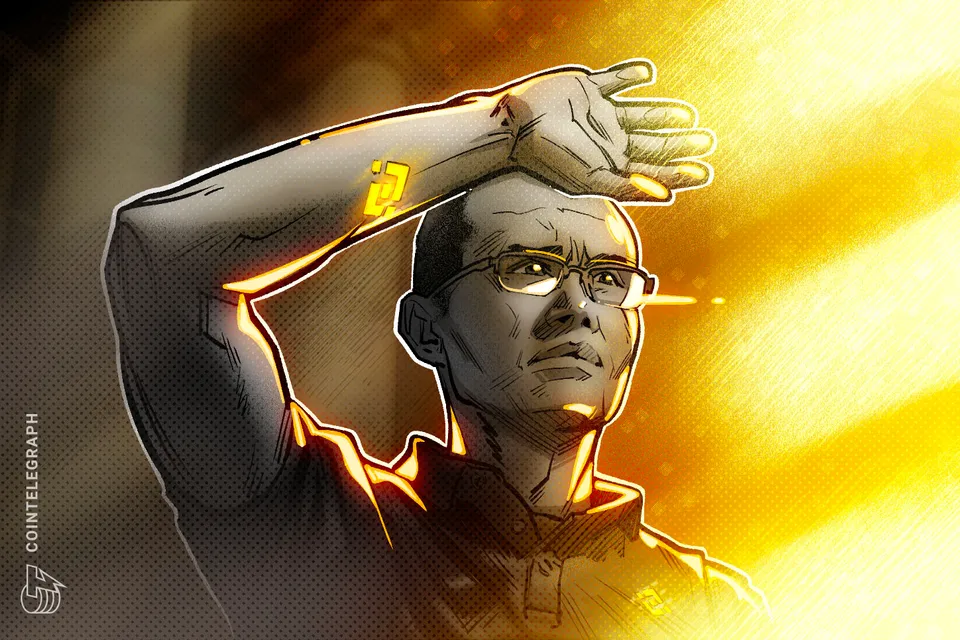
Former FTX chief operating officer Constance Wang has criticized Netflix’s new series The Altruists, accusing the production of depicting Binance founder Changpeng Zhao through racial stereotypes and presenting a misleading account of events surrounding FTX’s collapse.
Speaking during Cointelegraph’s Chain Reaction program on X Spaces Wednesday, Wang described the portrayal as racist, arguing that the series relied on familiar stereotypes of Asian organized crime figures.
Her criticism centered on a scene showing FTX founder Sam Bankman-Fried and former Alameda Research CEO Caroline Ellison entering through a back entrance to meet Zhao, widely known as CZ. According to Wang, the sequence presents Zhao as an Asian mafia-style character attempting to lure two seemingly innocent individuals into wrongdoing.
The series, which premiered Thursday, dramatizes the expansion and eventual collapse of Bankman-Fried’s cryptocurrency empire. FTX, once among the world’s largest crypto exchanges, imploded in November 2022 after a wave of customer withdrawals exposed a multibillion-dollar financial shortfall.
Another controversial moment appears in the fourth episode, where Zhao allegedly encourages Bankman-Fried and Ellison to give Alameda advance access to customer orders so the trading firm can execute transactions ahead of them.
Zhao publicly objected to the depiction, describing the scene as “insane” and questioning the potential impact on viewers’ understanding of the events. Ethereum co-founder Vitalik Buterin also raised concerns, pointing to the exaggerated accent used by the actor portraying Zhao and questioning whether the characterization crossed into racial stereotyping.
Series creator Graham Moore subsequently acknowledged that the sequence was fictional. In a Friday essay published by Vulture, Moore said there was no evidence that Zhao had specifically pressured FTX to engage in front-running.
Wang disputes Netflix’s depiction of life inside FTX
Beyond the portrayal of Zhao, Wang argued that The Altruists significantly distorted the internal culture and relationships at FTX and Alameda Research.
After watching the production alongside several former colleagues, she dismissed much of its storyline as fictional, challenging its representation of workplace parties, relationships between executives and her own reactions to problems within the company.
Wang also recalled the financial consequences of FTX’s collapse for employees who had trusted the exchange with their personal savings.
According to her, many staff members had kept virtually all their money on the platform. One employee based in Hong Kong was reportedly left unable to afford a flight home, forcing another person to purchase his ticket.
Following FTX’s collapse, Wang remained in the Bahamas in an effort to obtain answers directly from Bankman-Fried.
She recalled that their final conversation before his extradition to the United States produced little explanation beyond an apology.
“The only thing Sam told me was ‘I’m sorry, I fucked up,'” Wang said.
She added that Bankman-Fried never provided her with further clarification beyond comments he later made in public interviews. Wang also said she has had no contact with either Bankman-Fried or Ellison since that period.
Bankman-Fried and Ellison faced prison sentences
The real-world legal consequences of FTX’s collapse were substantial.
Bankman-Fried was convicted on seven fraud and conspiracy charges and received a 25-year prison sentence in March 2024. His subsequent appeal seeking to overturn the conviction and sentence was unsuccessful.
Ellison, meanwhile, pleaded guilty in December 2022 and became a key prosecution witness against Bankman-Fried. She was sentenced to two years in prison in September 2024.
Wang’s criticism adds to the debate over how The Altruists balances dramatic storytelling with historical accuracy, particularly when portraying real individuals and events surrounding one of the cryptocurrency industry’s most consequential collapses.