
Bitcoin staged a powerful recovery on Thursday, climbing to within just $50 of the $63,000 mark, while Ether outperformed the broader cryptocurrency market, surging to approximately $1,775. The rally marks a sharp reversal after a turbulent week in which Bitcoin briefly touched its lowest level in 21 months and Ether slipped to fresh lows for 2026.
At first glance, the recovery appears to suggest that market sentiment has begun to stabilize. However, a deeper look into derivatives positioning, ETF flows, and investor psychology paints a far more nuanced picture. While institutional demand is showing signs of returning, excessive leverage continues to build across futures markets—raising the possibility that the latest rally could face significant volatility in the sessions ahead.
Market Recovers Despite Extreme Investor Fear
One of the most striking aspects of the recent rebound is its timing.
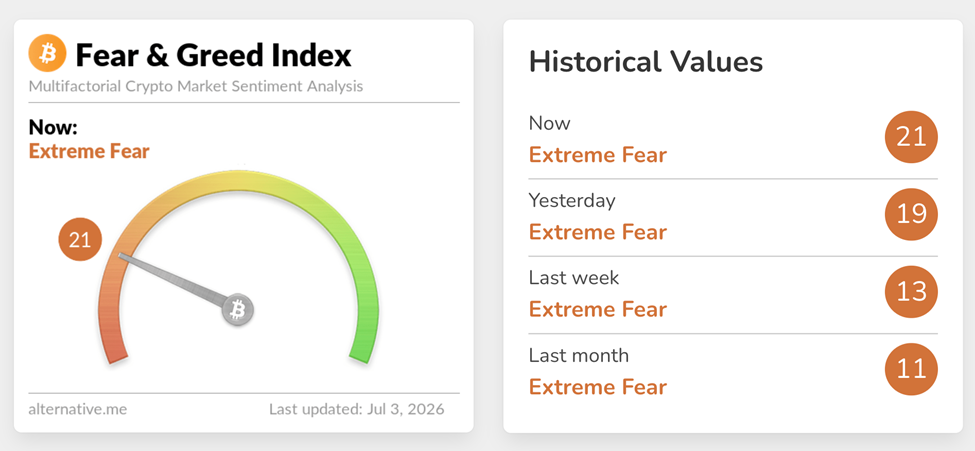
Even as Bitcoin and Ether pushed higher, the Crypto Fear & Greed Index remained firmly in “Extreme Fear,” registering just 11 out of 100. Historically, readings at these levels have reflected widespread pessimism, panic selling, and expectations of further downside.
Yet markets often move against consensus.
Periods of extreme fear have frequently coincided with major accumulation phases, as institutional investors begin buying while retail sentiment remains overwhelmingly bearish. The current divergence between price action and investor psychology suggests that confidence may be returning faster than sentiment indicators have been able to reflect.
This disconnect could prove significant if buying pressure continues to strengthen over the coming weeks.
Spot Bitcoin ETFs Deliver Their Strongest Signal in Months
Perhaps the most encouraging development came from the institutional side of the market.
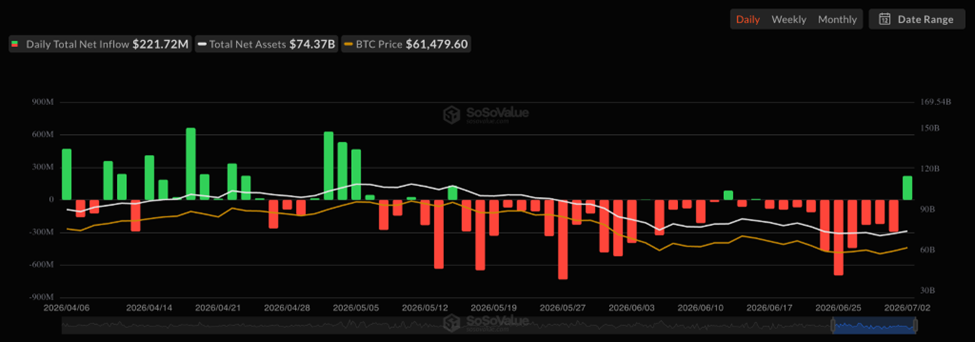
On July 2, U.S. spot Bitcoin ETFs recorded approximately $221.7 million in net inflows, marking the strongest single-day capital inflow since early May. More importantly, the surge ended ten consecutive trading days of net outflows, suggesting that institutional investors may once again be accumulating Bitcoin after weeks of persistent selling pressure.
ETF flows have increasingly become one of the most influential indicators of Bitcoin demand since the approval of U.S. spot Bitcoin ETFs. Sustained inflows typically represent long-term capital entering the market rather than speculative short-term trading.
If Wednesday’s buying proves to be the beginning of a broader trend rather than a one-day anomaly, it could provide a stronger fundamental foundation for Bitcoin’s current recovery.
Futures Markets Reveal Growing Speculative Optimism
While spot demand has improved, derivatives data tells a more complicated story.
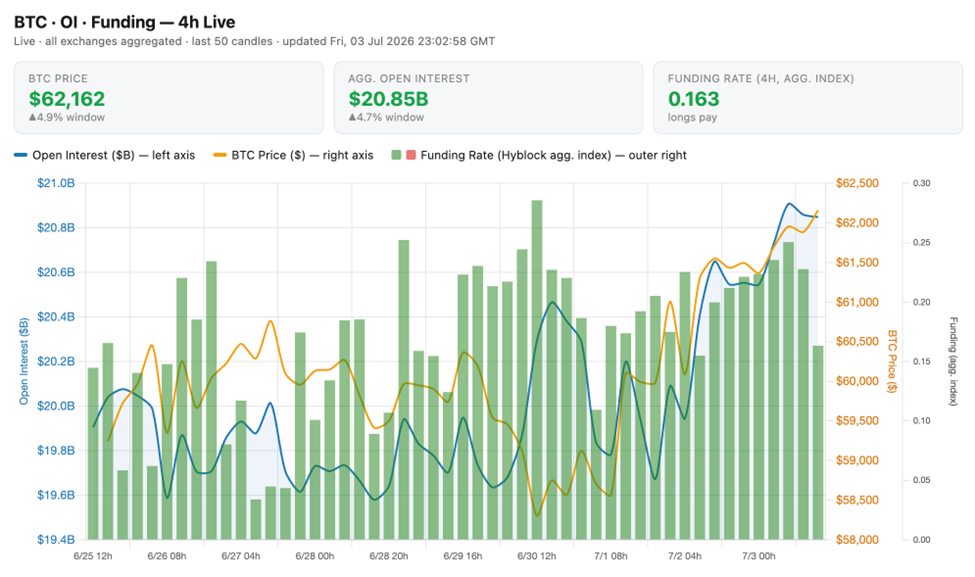
Bitcoin funding rates have remained positive for eight consecutive days, indicating that traders holding long positions are consistently paying premiums to those betting against the market. Positive funding generally reflects bullish expectations, but when funding rises too quickly, it often signals that optimism has become overcrowded.
At the same time, Bitcoin open interest has climbed toward recent highs despite relatively modest price appreciation.
This divergence deserves close attention.
When open interest expands while prices remain largely range-bound, it suggests that new leveraged positions are entering the market without a corresponding increase in underlying spot demand. Such conditions frequently create an unstable environment where even modest price movements can trigger cascading liquidations.
Rather than confirming a sustainable uptrend, rising leverage may instead increase the market’s vulnerability to sudden volatility.
Why Rising Leverage Can Become a Double-Edged Sword
Leverage amplifies both gains and losses.
As more traders enter highly leveraged long positions, the market becomes increasingly sensitive to relatively small price declines. Should Bitcoin lose a key technical support level, forced liquidations could rapidly accelerate selling pressure.
Conversely, if Bitcoin continues climbing, heavily leveraged short sellers may be forced to cover their positions, creating a short squeeze that drives prices higher at an even faster pace.
This delicate balance explains why derivatives positioning has become one of the most important indicators for traders monitoring Bitcoin’s next major move.
At present, leverage is acting less as confirmation of strength and more as a source of potential instability.
Critical Price Levels to Watch
Several technical levels are likely to determine Bitcoin’s short-term direction.
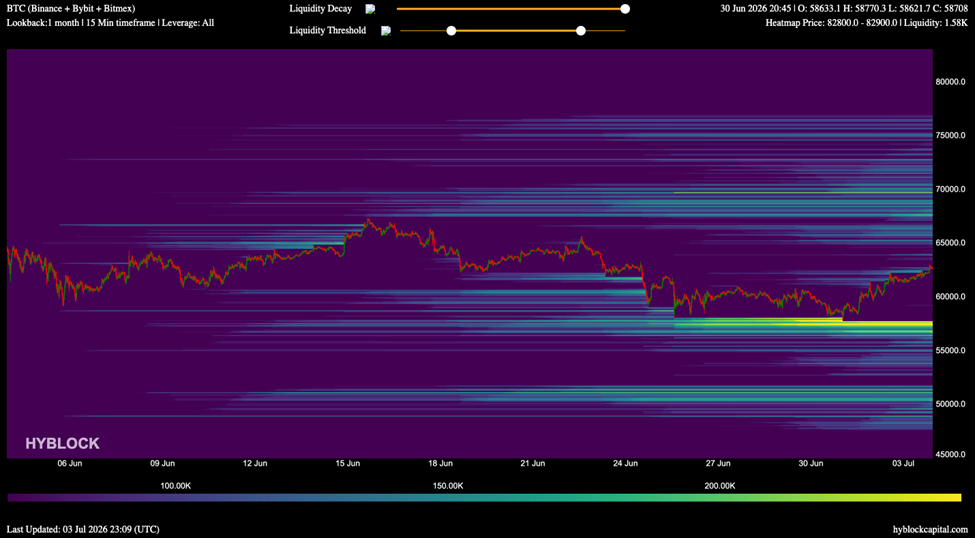
The first key support lies near $61,000, where a significant concentration of leveraged long positions currently exists. Maintaining this level would suggest that buyers remain in control and that recent ETF inflows are providing genuine support.
On the upside, reclaiming $62,500 would place Bitcoin within striking distance of liquidity zones containing large clusters of short positions. A decisive breakout above this area could trigger widespread short liquidations, potentially fueling another wave of upside momentum.
Whether institutional buying continues alongside improving price action will likely determine which scenario unfolds.
A Holiday Weekend Could Increase Volatility
Another variable that traders should not overlook is market liquidity.
The upcoming U.S. holiday weekend traditionally brings thinner trading volumes as institutional participation declines. Lower liquidity often magnifies price swings, allowing relatively modest buying or selling activity to produce disproportionately large market movements.
Combined with elevated leverage across futures markets, reduced liquidity creates an environment where volatility can increase rapidly in either direction.
Investors should therefore be cautious when interpreting weekend price movements, as they may not accurately reflect broader market trends.
Outlook: Recovery Begins, but Confirmation Remains Elusive
Bitcoin’s rebound has undoubtedly improved short-term market sentiment, particularly as institutional capital returns through spot ETFs. The recovery also demonstrates that market psychology can lag behind price action, with the Fear & Greed Index still signaling extreme pessimism despite strengthening demand.
However, the derivatives market tells a more cautious story.
Funding rates continue to rise, open interest remains elevated, and leverage has accumulated faster than prices themselves. These conditions have historically preceded periods of heightened volatility rather than uninterrupted rallies.
For now, the cryptocurrency market appears to be entering a transitional phase.
If ETF inflows continue, Bitcoin successfully defends the $61,000 support zone, and buyers reclaim resistance above $62,500, the recent rebound could evolve into a broader recovery. Failure to maintain those levels, however, could expose the market to another round of leveraged liquidations and renewed downside pressure.
In the coming sessions, investors should focus not only on Bitcoin’s price but also on whether institutional demand can continue to outweigh the growing speculative positioning in futures markets. That balance will likely determine whether this rally marks the beginning of a sustainable trend—or merely a temporary relief bounce within a still-fragile market.